
Zero-Click Exploits: How Hackers Can Hijack Your Devices Without a Click
Zero-Click Exploits: How Hackers Can Hijack Your Devices Without a Click
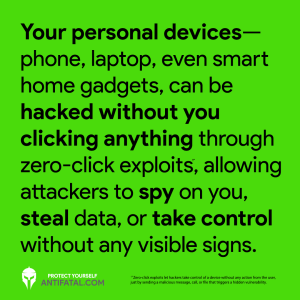
Your personal devices, like phones, laptops, and smart home gadgets are vulnerable to zero-click exploits. These are sophisticated attacks that allow hackers to access your devices without any action on your part just by sending a malicious message, call, or file that triggers a hidden vulnerability – leading to data theft, surveillance, or complete control over your devices.
Doesn’t get much easier than that, now almost zero work is involved on the hackers end. Between automation and AI rapidly improving, it’s about to get crazy. Remember that weird random text you got a few months ago? It could’ve been exactly that. It goes from a zero-click vulnerability to an “APT” attack (Advanced Persistent Threat). These go undetected for an extended period of time, carefully monitoring your activities before executing their final attack – which usually ends up being data theft, financial fraud or a wrecked system.
Understanding Zero-Click Exploits
Zero-click exploits are cyberattacks that do not require any action from the victim. Hackers take advantage of vulnerabilities in software, operating systems, or communication protocols to gain access to a device without the user clicking a link, opening an attachment, or downloading a file. These exploits often target messaging apps, operating system flaws, or even network protocols.
Attackers identify security weaknesses in applications that handle data automatically, such as messaging apps, email clients, or media players. Many apps process incoming files, images, and links in the background to provide a “seamless” experience (psh, somebody tell Facebook ‘seamless’ has left the room). If there is a vulnerability in the way these apps handle incoming data, hackers can inject malicious code into a message, image/voice file, or network request. As soon as the device receives and processes the malicious content, the exploit is triggered without any visible signs, and you let it happen because you downloaded the junk-bucket app! 🙂
Notable Examples
- iMessage Exploit (FORCEDENTRY): Hackers sent malicious PDFs disguised as images via iMessage. Since iPhones process images automatically, the exploit activated upon receipt, allowing spyware to access messages, calls, camera, and microphone.
-
Android MMS Image Exploit: A flaw in how Android phones processed multimedia messages (MMS) let hackers send a malicious image that activated upon arrival, granting access to the device.
-
Bluetooth Zero-Click Attack (BlueFrag): Hackers could exploit a vulnerability in Android’s Bluetooth system, allowing them to steal data from nearby devices without the user’s knowledge.
-
WhatsApp Vulnerability: In 2019, a flaw in WhatsApp allowed attackers to install spyware via a missed call, granting them access to messages, calls, and more.
-
Pegasus Spyware: This sophisticated spyware has been used to infiltrate devices through zero-click methods, enabling unauthorized access to personal data and communications.
for more context read: Pegasus via Vorys
Common targets (as loosely explained above) include:
These attacks often target vulnerabilities in:
-
Messaging Apps: Applications like iMessage and WhatsApp have been exploited to deliver malicious code without user interaction.
-
Multimedia Files: Hackers embed malicious code in images or videos, which, when received, can execute commands on your device.
-
Wireless Technologies: Bluetooth and Wi-Fi protocols can have vulnerabilities that allow attackers to gain unauthorized access.
Protecting Your Devices
To safeguard against zero-click exploits:
-
Keep Software Updated: Regularly update your device’s operating system and applications to ensure you have the latest security patches.
-
Install Trusted Security Software (FATAL Cybersecurity):
Use reputable antivirus and anti-malware programs to detect and prevent unauthorized access.Blah blah. No, just subscribe to FATAL Cybersecurity. We will literally never allow this crap to happen to you, and we have a dedicated 24/7/365 U.S. based response team that will be alerted and respond to ANY potential threat on your devices. Day or night. -
Disable Unnecessary Features: Turn off services like Bluetooth and Wi-Fi when not in use to reduce potential entry points.
-
Be Cautious with Unknown Contacts: Avoid interacting with unsolicited messages or calls, even if no action is required on your part.
Alright alright, let’s wrap it up…..
Zero-click exploits pose a significant threat to device security, as they operate without user awareness. We hope you learned something new today. By staying informed and implementing proactive security measures (cough FATAL cough), you can become ANTI-FATAL and protect your personal devices from these silent intrusions.
To stay protected, FATAL offers protection for personal users and businesses. Protect your home devices from intrusion and spying, especially when your kids are online, and in line with that of a Netflix or Hulu subscription. Get started today, setup is quick and simple!
Don’t wait until it’s too late. Someone could be watching you every day through your cameras when you arrive home, regardless of whether you changed the default password or anything you’ve heard to the contrary.
Related Posts

North Korea’s Hidden Remote Job Infiltration
North Korea’s Hidden Remote Job Infiltration The Day the FBI Came Knocking Imagine answering your…

Nuclear Access Through a Microsoft Hole
Nuclear Access Through a Microsoft Hole The agency that manages America’s nuclear weapons got breached…

Infostealer Malware Dump Exposes Billions of Logins
Infostealer Malware Dump Exposes Billions of Logins A massive data leak has just surfaced online,…

Massive Data Leak Exposes 184 Million Passwords from Major Platforms and Government Accounts
Massive Data Leak Exposes 184 Million Passwords from Major Platforms and Government Accounts A massive…

Texas-Based eWorldTrade and Pakistani Partner Abtach Exposed: Massive Scam Network Used Online Ads to Defraud U.S. Consumers
Pakistani Firm Shipped Fentanyl Analogs to US Using Scam Online Ads A Texas firm recently…

AI Voice Cloning Scams: The Threat You Can’t Ignore
AI Voice Cloning Scams: The Threat You Can’t Ignore Voice cloning scams are becoming a…